
| Complete Certification Courseware | |||||
|---|---|---|---|---|---|
| Chapters List | |||||
| 1 | Building the Six Sigma Infrastructure | ||||
| 2 | Six Sigma Goals and Metrics | ||||
| 3 | Creating Customer-Driven Organizations | ||||
| 4 | Training for Six Sigma | ||||
| 5 | Six Sigma Teams | ||||
| 6 | Selecting and Tracking Six Sigma Projects | ||||
| 7 | Introduction to DMAIC and Other Improvement Models | ||||
| 8 | Problem Solving Tools | ||||
| 9 | Basic Principles of Measurement | ||||
| 10 | Measurement Systems Analysis | ||||
| 11 | Knowledge Discovery | ||||
| 12 | Statistical Process Control Techniques | ||||
| 13 | Process Capability Analysis | ||||
| 14 | Statistical Analysis of Cause and E¡ect | ||||
| 15 | Managing Six Sigma Projects | ||||
| 16 | Risk Assessment | ||||
| 17 | Design of Experiments (DOE) | ||||
| 18 | Maintaining Control After the Project | ||||
| 19 | Design for Six Sigma (DFSS) | ||||
| 20 | Lean Manufacturing and Six Sigma | ||||
| Professional Certification Exam (PMP) | |||||
| Format: | It consists of 40 Multiple-choice Questions | ||||
| Core Domains: | Tested across three pillars—People (42%), Process (50%), and Business Environment (8%). | ||||
| The Updated Exam: | A refreshed Six Sigma exam introduces heavier focuses on sustainability, AI tools, and value delivery. | ||||
| People (42%): | Focuses on conflict management, leading teams, and supporting performance. | ||||
| Process (50%): | Covers the methodologies needed to manage budgets, schedules, risks, and project changes. | ||||
| Business Environment (8%): | Focuses on connecting projects to overall organizational strategy and compliance. | ||||
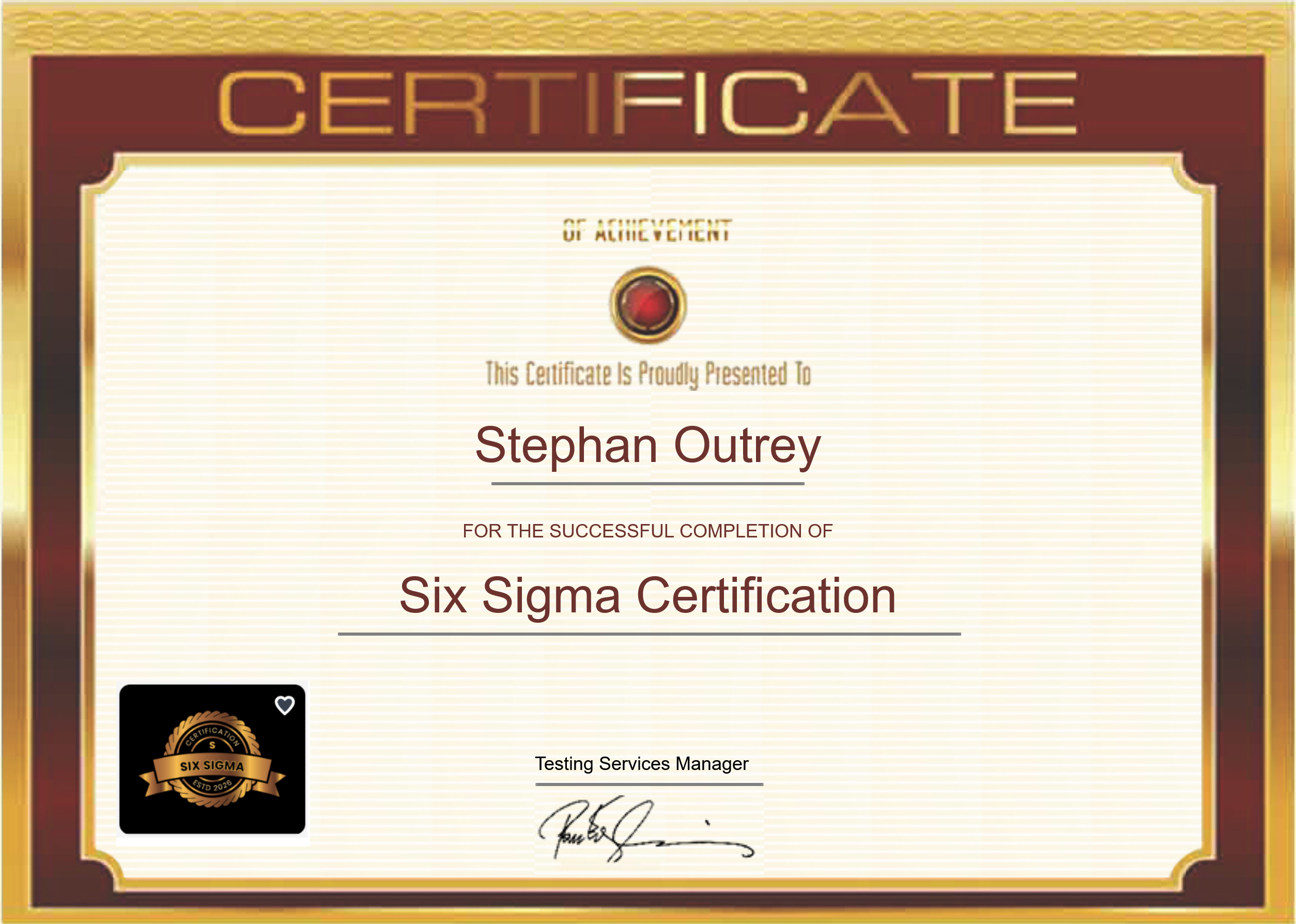
| Certificate: |
|
||||